
OpenSciEd K-12
A Unified K-12 Science
Education Approach
High-Quality, NGSS-Aligned,
Science Curriculum for Your District
We are excited to introduce OpenSciEd Elementary, a dynamic K-5 science curriculum that brings phenomena-based learning to the youngest scientists.
This launch expands our full K-12 OpenSciEd lineup, offering a seamless, engaging science experience from kindergarten through high school. OpenSciEd utilizes inquiry-based learning principles, allowing students to explore scientific concepts through real-world phenomena.

Meet the OpenSciEd K-12 Science Curriculum!
-
Research-Based
OpenSciEd is research-based, taking into account how students learn, their motivations and implications regarding teacher and student engagement.
-
Tested By Educators
Developed with educators and extensively tested by teachers and schools. Continuously updated and improved based on field testing and feedback from teachers.
-
NGSS Alignment
Aligned to the Framework and NGSS. Units can be adapted to fit your state's sequence.
-
Equitable
The class community values the diversity of resources students bring to science class and understand how the learning is relevant to their own lives and communities.
Available as a package or for individual purchase

Digital
Interactive Content on the Activate Learning Digital Platform

Student Notebooks, Student Readers, and Teacher Edition

Kits
All materials necessary for investigations for all OpenSciEd units

Professional Learning
Full implementation support and certified professional learning
Program Highlights
Our end-to-end implementation supports these pillars, no matter the grade level.

Three-Dimensional
Phenomena-Based Approach
Students explore driving questions, conduct investigations, collect and analyze data, develop and use models to explain phenomena.

Designed for Equitable Science Learning
Access high-quality, adaptable materials that support standards-based, equitable science learning.

Total Support
for Teachers
Content, structure, and support to experience three-dimensional teaching and learning with OpenSciEd.
Explore Curricula

Discover OpenSciEd K-12 on the
Activate Learning Digital Platform
Experience a truly interactive digital edition of all OpenSciEd materials for teachers and students.
The Activate Learning Digital platform has earned the prestigious ISTE Seal validation for high-quality education technology platforms.
The platform is designed for student safety and accessibility and offers embedded translation for 140+ languages, text-to-speech with read-along highlighting, and sentence starters to support writing.
Featuring an intuitive user experience, teachers have everything they need to Plan, Teach, Assign, and Assess lessons in a platform that is integrated with leading SIS rostering and Learning Management Systems. And with Lesson Launch, teachers can can quickly view slides, handouts, student edition, and materials in one place!
Activate Learning Insight™ science assessments for middle school and high school and Activate Learning Virtual Investigations® for elementary, middle school, and high school are exclusively available on the Activate Learning Digital Platform.
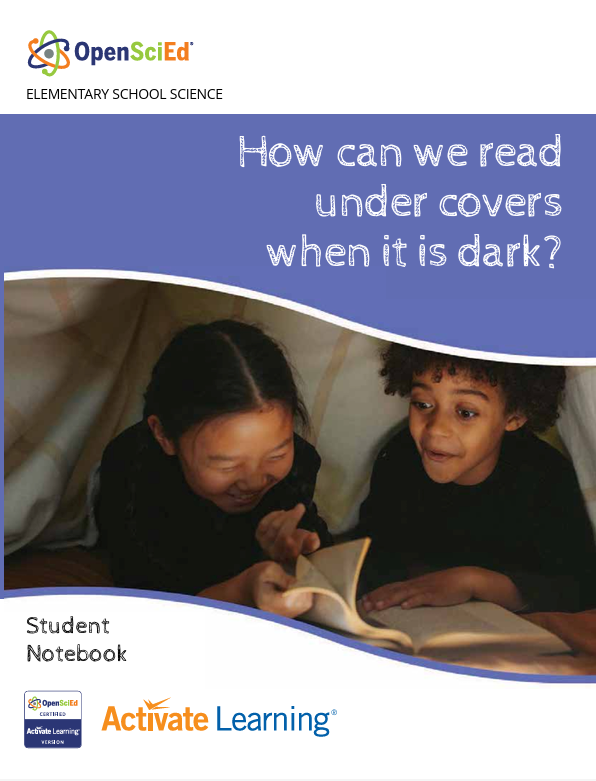
OpenSciEd Books & Student Notebooks
Full-color print Teacher and Student Editions for each OpenSciEd Middle School science curriculum.
Four-color print Teacher Editions for each published unit of the OpenSciEd High School science curriculum.
Digital and full-color print versions of Student Readers to support literacy integration for OpenSciEd Elementary School science curriculum
- The ability to read and comprehend science text is essential for student engagement in science. OpenSciEd integrates informational text into its units to help students gather information, expand vocabulary, and discuss scientific concepts.
- The texts are intentionally crafted to enhance students’ sensemaking and expose them to various perspectives and disciplines within the scientific community.
Say goodbye to printing with our Student Notebooks!
- Notebooks provide all student handouts, reference sheets, articles and infographics with plenty of room for students to capture their responses to questions and discussion prompts.
- A helpful Community of Growing Ideas Chart is included for each OpenSciEd Elementary School unit.
- Multiple copies of the Project Tracker are included for each OpenSciEd Middle School and OpenSciEd High School unit.
- The perforated pages make it easy for students to put completed work into folders and binders!
- Available for all OpenSciEd K-12 science curricula.
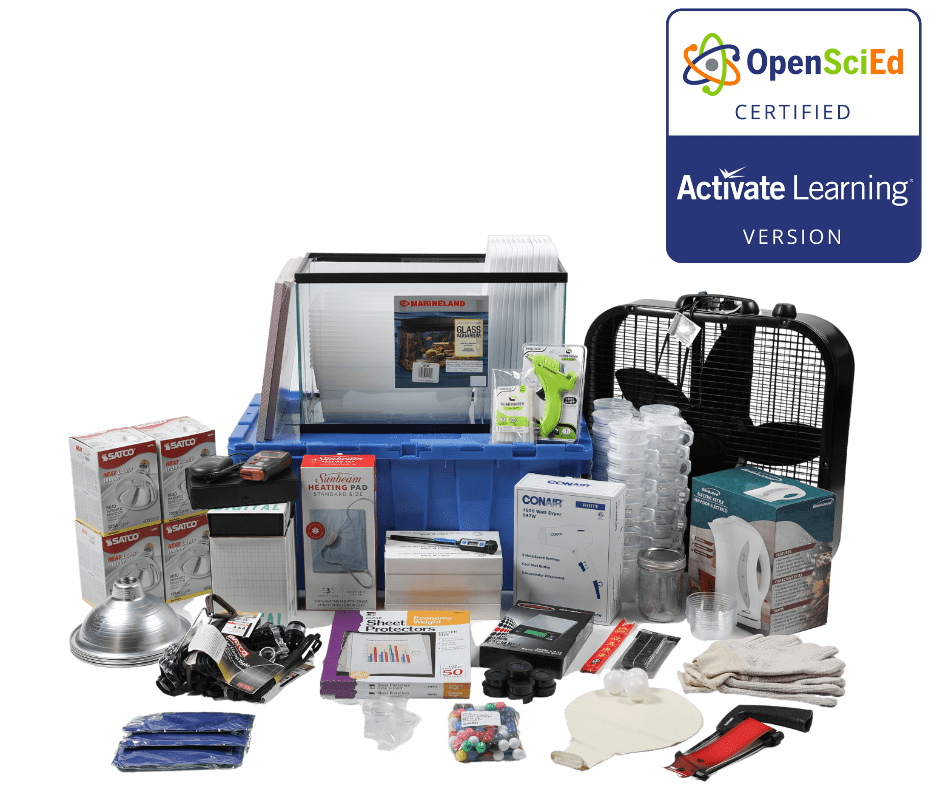
Certified OpenSciEd Science Kits
Science equipment and materials are an essential element to investigation-centered learning and Activate Learning offers science kits to support every activity in each unit for OpenSciEd K-12.
- All products are rigorously tested for quality assurance.
- Materials are grouped by lesson so teachers can easily locate lesson-specific materials.
- Activate Learning Kit Companion™ helps teachers save time and easily find everything in their shipment, quickly access important Safety Data Sheets, and view how-to videos to set up materials. *Activate Learning Kit Companion™ for Elementary School Coming in Fall 2025.
Certified OpenSciEdProfessional Learning
Activate Learning curriculum experts provide extensive OpenSciEd K-12 product implementation support and certified professional learning on the latest, most innovative strategies and techniques to engage students.
Comprehensive professional learning resources provide the necessary content, structure, and support to experience three-dimensional teaching and learning with OpenSciEd.
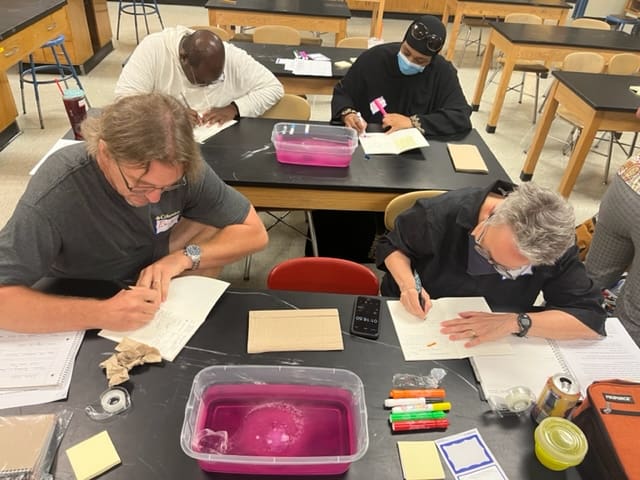
Scope and SequenceAt a Glance
The OpenSciEd Instructional Model uses a storyline approach, each lesson motivated by questions generated by students following their interactions with phenomena. In each unit of study, students explore the questions they have, make conclusions based on those investigations, and then strategize to come up with the next set of questions to investigate.
Below are example unit sequences based on NGSS guidelines, however, all units can be adapted to fit your state's unique sequence.
Contact us to learn more about aligning the OpenSciEd K-12 curriculum to your state standards.

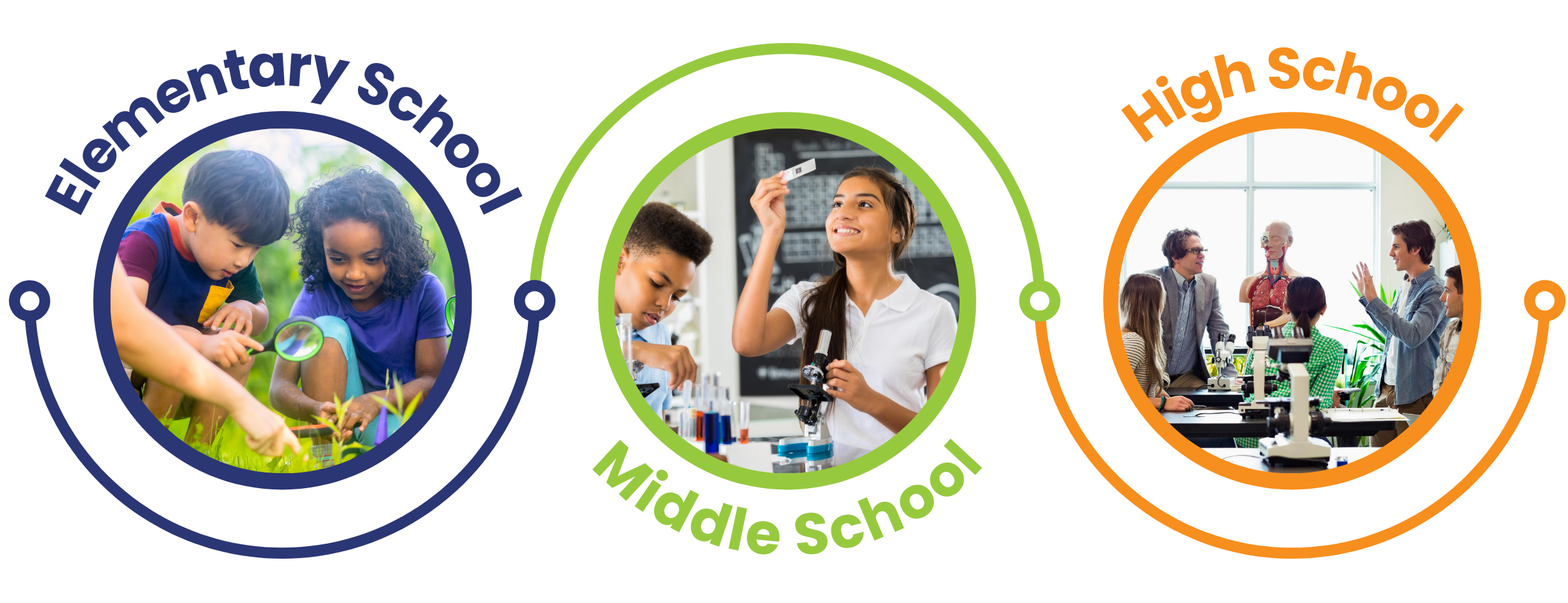
Elementary School
Unit K.1 Energy: Sunlight
Why do some surfaces get hot and how can we make them less hot?
Unit K.2 Weather
How can we be prepared for the weather?
Unit K.3 Forces & Motion
How can we move things to where we want them to go?
Unit K.4 Ecosystems: Plants, Animals, and their Environment
What do plants and animals need and should we help them?
Unit 1.1 Waves: Light
How can we read under covers when it is dark?
Unit 1.2 Waves: Sound
How do objects make and use sound to communicate?
Unit 1.3 Space: Sky Patterns
How do patterns of the Sun, Moon, and stars affect what we see in the sky?
Unit 1.4 Animal & Plant Traits
How do animals and plants use their parts to survive?
Unit 2.1 Earth: Land Changing Shape
How do wind and water change the shape of the land and what can we do about it?
Unit 2.2 Structure & Properties of Matter
How can we design a new toy?
Unit 2.3 Habitats & Biodiversity
What plants and animals live in different lands, waters, and other places?
Unit 2.4 Plants
How is that growing there?
Unit 3.1 Forces & Interactions
How can we design objects to balance and move in different ways?
Unit 3.2 Weather & Hazards
Why do plants only grow well in certain places, and how can we protect them?
Unit 3.3 Trait Variations
Why do animals look and act the way that they do?
Unit 3.4 Ecosystem Change & Survival
How do changes to ecosystems affect what lives there?
Unit 4.1 Energy Transfer: Collisions
Why does an object’s motion change?
Unit 4.2 Energy Transfer: Electricity
How do we power computers and other electrical devices?
Unit 4.3 Earth Processes Fall 2025
What causes Earth’s landscape to change and how do the changes impact humans?
Unit 4.4 Structure & Function
How do the structure and function of traits of living things benefit them?
Unit 5.1 Ecosystems & Matter Cycling
How does a nurse log help other things live and grow?
Unit 5.2 Matter Properties
How can we make water healthy for all living things?
Unit 5.3 Earth Systems
How does changing the flow of water impact Earth’s systems, and how can humans help?
Unit 5.4 Earth in the Universe
How and why does what I see in the sky change?
Middle School
6.1 Light & Matter: Why do we sometimes see different things when looking at the same object?
6.2 Thermal Energy: How can containers keep stuff from warming up or cooling down?
6.3 Weather, Climate & Water Cycling: Why does a lot of hail, rain, or snowfall at some times and not others?
6.4 Rock Cycling & Plate Tectonics: How and why does Earth's surface change?
6.5 Natural Hazards: Where do natural hazards happen and how do we prepare for them?
6.6 Cells & Systems: How do living things heal?

7.1 Chemical Reactions & Matter: How can we make something new that was not there before?
7.2 Chemical Reactions & Energy: How can we use chemical reactions to design a solution to a problem?
7.3 Metabolic Reactions: How do things inside our bodies work together to make us feel the way we do?
7.4 Matter Cycling & Photosynthesis: Where does food come from and where does it go next?
7.5 Ecosystem Dynamics: How does changing an ecosystem affect what lives there?
7.6 Resources & Human Impact: How do changes in the Earth's system impact our communities and what can we do about it?
8.1 Contact Forces: Why do things sometimes get damaged when they hit each other?
8.2 Sound Waves: How can a sound make something move?
8.3 Forces at a Distance: How can a magnet move another object without touching it
8.4 Earth in Space: Why do we see patterns in the sky, and what else is out there that we can't see?
8.5 Genetics: Why are living things different from one another?
8.6 Selection and Common Ancestry: How could living things today be connected to the things that lived long ago?

High School
B.1 Ecosystems Interactions & Dynamics
How do ecosystems work, and how can understanding them help us protect them?
B.2 Ecosystems: Matter & Energy
What causes fires in ecosystems to burn and how should we manage them?
B.3 Inheritance & Variation of Traits
Who gets cancer and why? Where should we focus efforts on treatment and prevention?
B.4 Natural Selection & Evolution of Populations
How is urbanization a driving force of evolution? Should we design urban spaces more hospitably for non-human species?
B.5 Common Ancestry & Speciation
How did polar bears evolve and what will happen to them as their environment changes?
C.1 Thermodynamics in Earth’s Systems
How can we slow the flow of energy on Earth to protect vulnerable coastal communities?
C.2 Structure & Properties of Matter
What causes lightning and why are some places safer than others when it strikes?
C.3 Molecular Processes in Earth Systems
How could we find and use the resources we need to live beyond Earth?
C.4 Chemical Reactions in our World
Why are oysters dying, and how can we use chemistry to protect them?
C.5 Energy from Chemical & Nuclear Reactions
Which fuels should we design our next generation vehicles to use?
P.1 Energy Flow from Earth’s Systems
How can we design more reliable systems to meet our communities’ energy needs?
P.2 Energy, Forces, & Earth’s Crust
How do forces in Earth’s interior determine what will happen to the surface we see?
P.3 Collisions & Momentum
What can we do to make driving safer for everyone?
P.4 Meteors, Orbits, & Gravity
How have collisions with objects from space changed Earth in the past, and how could they affect our future?
P.5 Electromagnetic Radiation
How do we use radiation in our lives, and is it safe for humans?
P.6 Stars & the Big Bang
Why do stars shine and will they shine forever?
Get Started Today