
Transforming ALL Students into Scientists
This program’s “learning-by-doing” pedagogical approach engages students as active learners and makes science come alive in ways that research has shown best support the broad range of learners found in every classroom. Students investigate questions relevant to their own daily lives by conducting investigations, collecting and analyzing data, developing and using models to explain phenomena, and engaging in healthy debate from evidence.
IQWST® Investigating and Questioning our World through Science and Technology has the flexibility to meet all unique state standards, while also aligning with Next Generation Science Standards.


Investigation-Centered
Storyline Approach
Referencing real-world science with which students from all backgrounds are familiar allows students to value science learning, and apply what they are learning to their everyday lives.

Students Learn Like Scientists and Engineers
Students pursue their own original questions in units that integrate the fundamentals of Physical Sciences, Life Science, and Earth & Space Science.

Total Support
for Teachers
In person and online teacher support, educational webinars, lesson modeling, and much more is provided by our Professional Learning Team.
Need more info to decide if this the right curriculum for your district or school?
Curriculum Details
IQWST engages all students with shared phenomena, investigations, and opportunities to draw upon and connect their everyday life experiences with science content. Students experience phenomena firsthand through hands-on investigations manipulating science materials whenever possible to understand and explain the phenomena.
Additional Versions Available:
Student-Driven Learning
Curricular Coherence
IQWST utilizes Circular Coherence - revising and building on ideas across time. This provides students with opportunities to develop, reinforce, and apply their understandings on an ongoing basis throughout their middle school years.
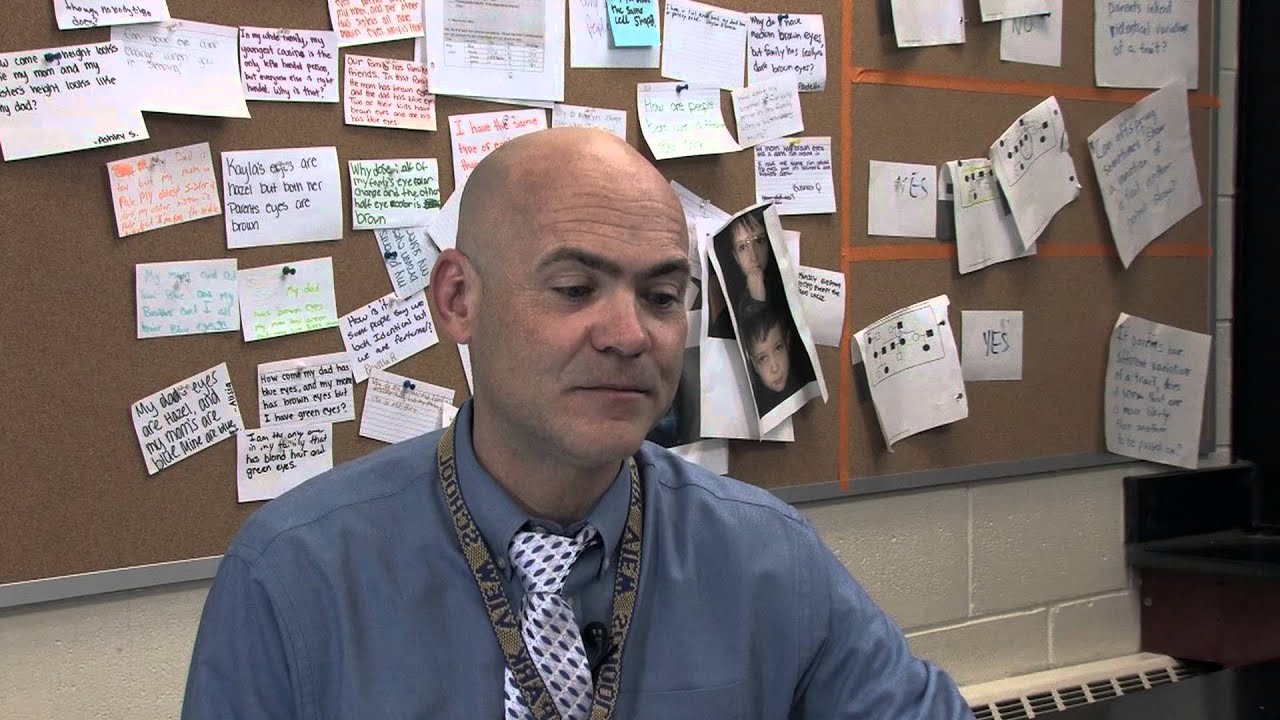
Driving Question Board (DQB)
A powerful visual tool that puts students at the center of their learning experience! The Driving Question Board is a large poster board prominently displaying the driving question in each unit for exploring phenomena at its center, surrounded by sub-questions that represent the main learning goals. It’s a collaborative creation, jointly constructed by both students and the teacher at the start of the unit, and it evolves throughout the learning process.
Instructional Design with Teachers in Mind
Classroom Implementation
IQWST Teacher Edition includes lesson plans, discussion questions, differentiation strategies, and background information for each unit, and Video Tutorials on activity set ups are also available.
Remote Learning Options
The Remote Learning Lesson Plans condense what is taught in each activity with specific teaching recommendations and identify the digital resources, print resources, and materials needed to teach and learn outside of the classroom.
Claim, Evidence, & Reasoning (CER)
The CER Framework was born and developed in IQWST as a result of teachers’ desire to better support their students as scientific thinkers and writers.
IQWST 3.0 Units
IQWST units are arranged in a recommended sequence to optimize coherence and build content understanding over time. However, many districts have successfully developed additional sequences to meet the needs of their students and districts.
Lessons are organized into thematic units such as Can I Believe My Eyes? (Physical Science) and What's Going on Inside Me? (Life Science), that support students as they build an understanding of core ideas in science as well as understanding and use of scientific practices.
In order to contextualize core ideas about the nature of matter, this unit focuses on the everyday life experience of smelling odors whether close to or far from one’s nose. As students investigate this and other phenomena, they develop models of how people smell odors and use their models to explain and predict what happens in various scenarios. Rather than simply accepting a particle model (that matter is comprised of molecules, which are comprised of atoms), students come to understand this core science idea over time as the only way to explain that air can be compressed, expanded, added to, and subtracted from a container. Students then use the particle model to explain why substances have different properties, and to explain the behavior of particles in each state of matter and at a substance’s melting and boiling points during phase change, including the relationship between the movement of molecules and temperature. Students’ model of matter, which is represented both as a drawing and a written explanation, represents a conceptual understanding that “all matter is made of particles in constant motion,” a concept revisited in future IQWST units in physics, chemistry, life science, and Earth science and central to all future science learning.
To contextualize core ideas about the water and rock cycles at the middle school level, this unit focuses on selected national parks in the United States and the study of features common and unique to each. In groups, students take on the task of collaborating to develop a visitors’ guide that explains how water has shaped the landscape of a single park. To complete this task, students must understand how water moves through the park, what types of rock are present, and how the water and rock have interacted to shape the land. Students learn where water can be found on, above, and below the Earth’s surface. They learn how water moves and is transformed in the water cycle by investigating evaporation, precipitation, infiltration, and flow. Students also explore how rocks are formed and the properties of different types of rock. Finally, they examine the effects of water on the land by investigating weathering, erosion, and deposition. To do so, students engage in relevant scientific practices, address crosscutting concepts, and build an understanding of energy and the particle nature of matter as both apply in the study of Earth science.
This ecosystem unit focuses on organisms’ needs for survival and what happens when those needs are not met. Throughout the unit, students investigate a specific population change: the decrease in the trout population in the Great Lakes from 1930 to 1990. Because the sea lamprey, as an invasive species in the Great Lakes, is such a fascinating organism, this particular case of population change engages students in learning core science ideas that they can then apply to changes in their local environments or elsewhere. Over the course of their investigation, students learn why food is important, what structures different organisms have in order to eat and reproduce, what the possible relationships are between organisms (e.g. competition, predator/prey, producer/consumer), and what abiotic factors affect ecosystems. All of these pieces help students to invest in developing an evidence-based scientific explanation and engaging in argumentation about why the trout population decreased so dramatically, employing a key scientific practice as they learn core science ideas.
The unit begins with a contextualizing activity in which students view optical illusions that make them uncertain of what they are seeing. They spend the next several weeks investigating light waves and their interaction with matter. To do so, students engage in several scientific practices, with an emphasis on constructing and using models to explain and predict phenomena. Each new investigation causes students to realize that the model they developed to fit one situation does not fit the new one, requiring revision based on new evidence. This practice enables students to engage in modeling in ways similar to those in which scientists develop, use, and revise models they use to explain and predict real-world phenomena. Students continually delve into core science ideas, gaining a deeper understanding of how light moves through space, what happens when it meets matter, how eyes detect light, how colors of light can be perceived, and that some light is non-visible. A conceptual understanding that “light can make things happen” sets the stage for understanding energy, a crosscutting concept revisited in future IQWST units in physics, chemistry, life science, and Earth science and central to all future science learning.
Digital Platform
The Activate Learning Digital Platform (ALDP) hosts the interactive digital edition of the IQWST teacher and student curriculum materials.
The Activate Learning Digital platform has earned the prestigious ISTE Seal validation for high-quality education technology platforms.
The platform is designed for student safety and accessibility and offers embedded translation for 140+ languages, text-to-speech with read-along highlighting, and sentence starters to support writing.
Featuring an intuitive user experience, teachers have everything they need to Plan, Teach, Assign, and Assess lessons in a platform that is integrated with leading SIS rostering and Learning Management Systems such as Google Classroom, Schoology, and Canvas.
And with Lesson Launch, teachers can quickly view slides, handouts, student edition, and materials in one place!
IQWST Middle School Assessments
ONPAR Digital Assessments to Effectively Gauge Student Learning
ONPAR digital assessments are aligned to the Next Generation Science Standards for Middle School. They challenge students to think deeply about science ideas while engaging in science and engineering practices and crosscutting concepts. These three-dimensional assessments integrate perfectly with the IQWST program.
In addition, ONPAR assessments have been found to be beneficial by many districts in providing student experience with the format and content of state tests.
Activate Learning Insight™ Supplemental Assessments
Built on the Activate Learning Digital Platform, Activate Learning Insight™ offers hundreds of pre-made assessments aligned to IQWST designed to help teachers evaluate student understanding across NGSS Performance Expectations and Disciplinary Core Ideas.
About The Authors
IQWST® was developed through grant funding from the National Science Foundation (NSF). The development team has combined expertise in science education, literacy education, and the learning sciences. The team was led by Principal Investigators Joe Krajcik, Ph.D., Brian Reiser, Ph.D., LeeAnn Sutherland, Ph.D., and David Fortus, Ph.D.
*This material is based upon work supported by the National Science Foundation under Award No. DRL 0439352 and ESI 0101780. Any opinions, findings, and conclusions, or recommendations expressed in this material are those of the author(s) and do not necessarily reflect the views of the National Science Foundation.
Joe Krajcik has focused on working with science teachers to reform science teaching practices (3-Dimensional Learning) to promote students' learning of science. He was head of The Next Generation Science Standards Physical Science Design team and led the Physical Science Design Team for the Framework for K – 12 Science Education.
Brian J. Reiser worked with the National Research Council committee to develop the Framework for K-12 Science Education, which guided the design of The Next Generation Science Standards (NGSS).
LeeAnn Adams was the former Chief Academic Officer for Activate Learning. In addition to her ongoing work to guide the development of the IQWST curriculum, she plays an active role in conducting professional development related to literacy learning in the context of science education.
David Fortus began his career as a science education researcher by developing learning environments that foster the transfer of scientific knowledge to real-world situations. Before joining the Weizmann Institute of Science, he was an assistant professor at Michigan State University, a high school physics teacher, and a project director in the aerospace industry.
Testimonials Hear Directly from Administrators & Teachers

Additional Resources
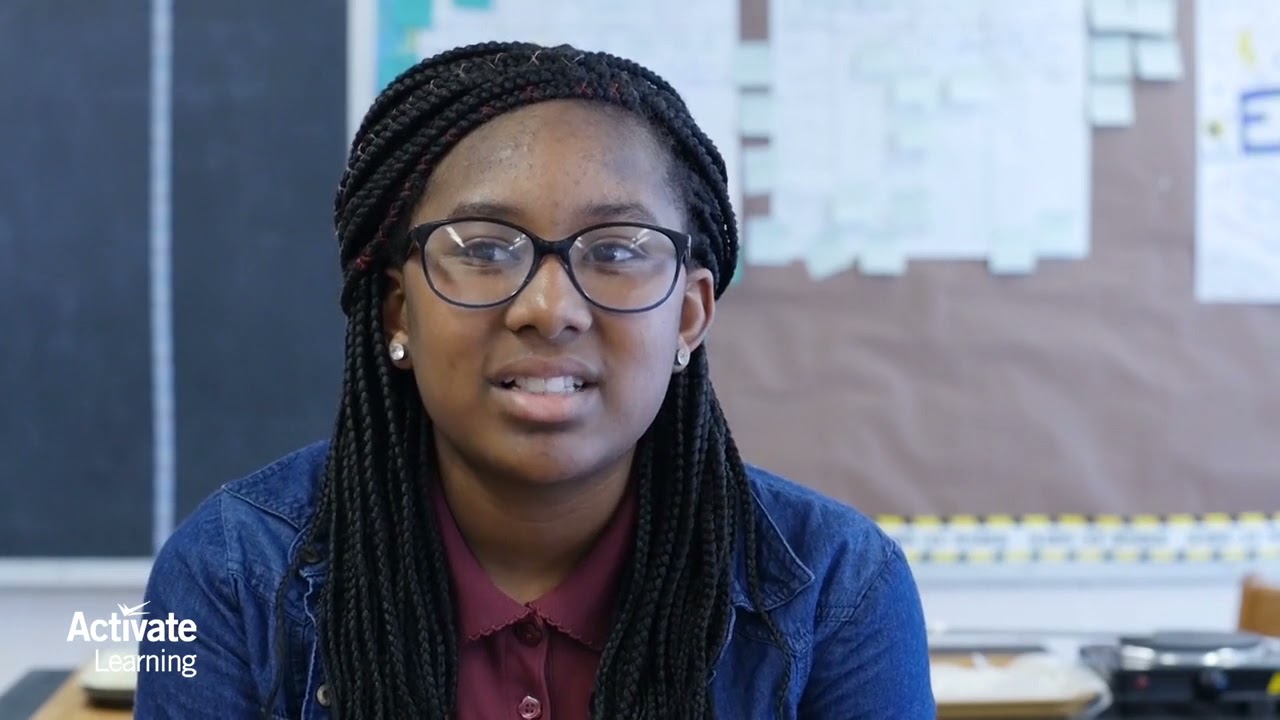
Student Experiences with IQWST at Baltimore Public Schools
What is the Driving Question Board?