
OpenSciEd K-12
For California Science Educators
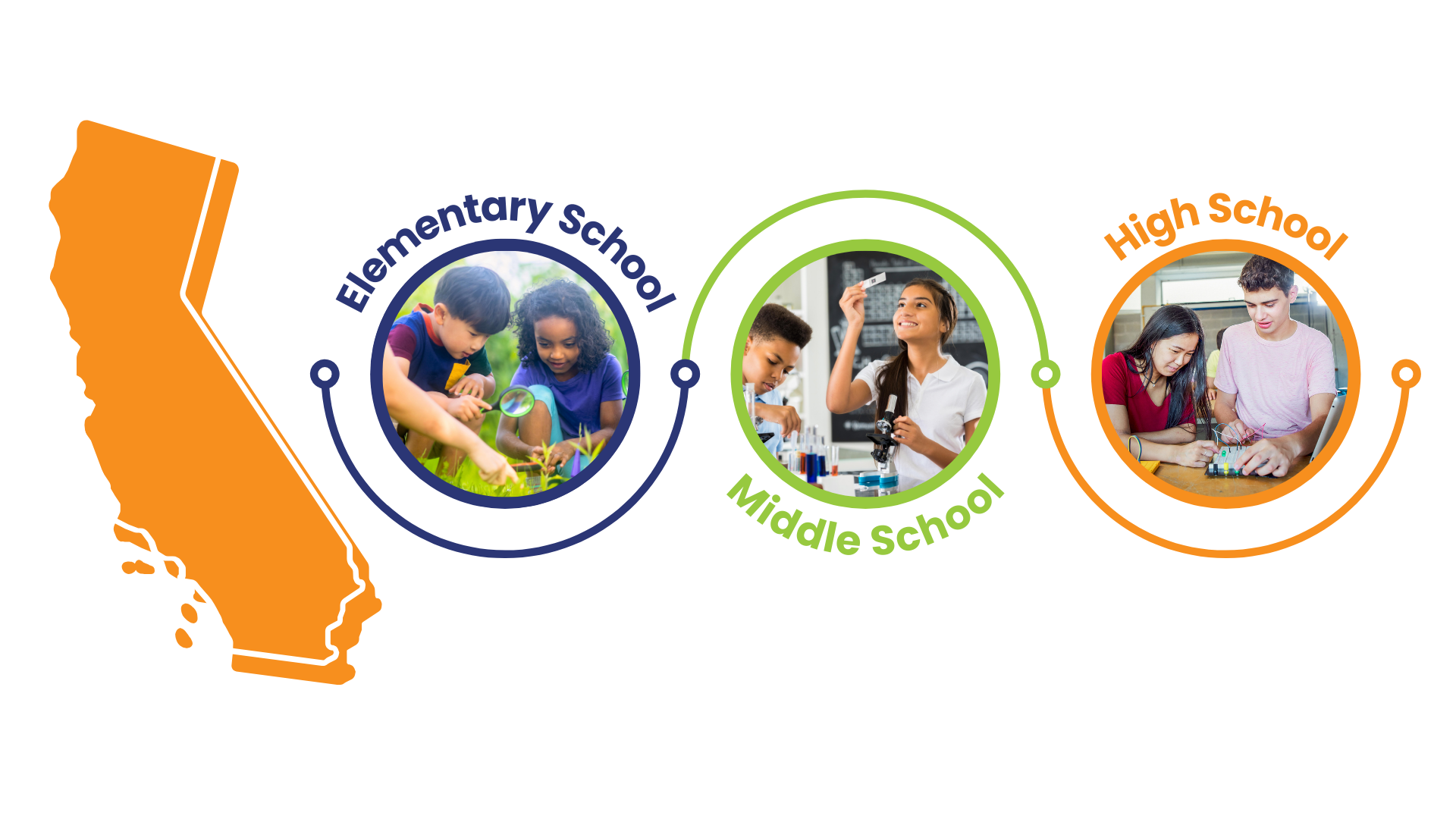
High-Quality, CA NGSS-Aligned,
Science Curriculum for California
Activate Learning collaborates closely with science educators to support student-centered and three-dimensional learning, so that teachers AND students are successful using high-quality instructional materials.
Explore Activate Learning's OpenSciEd Curriculum for Grades K-12, aligned for school districts in California!

Experience Activate Learning in Action!
Join us at the California Science Education Conference in Sacramento November 6-8, 2026! Visit Activate Learning at Booth #404 to get a hands-on look at our CA NGSS-aligned K–12 science programs and classroom kits, chat with our team about professional learning for California educators, and grab some great STEM swag while you’re there.
Make sure to see the Activate Learning sessions during the conference!
Spark Curiosity: Anchoring Phenomena Meets Driving Question Boards Friday, November 6 at 1:00pm in Room MR4, Presented by Faith Blaine.
Model Citizens: Boosting Elementary Literacy Through Science Modeling Saturday, November 7 at 9:30am in Room A6, Presented by Joanna Trigo.
Storyline Success: OpenSciEd Routines That Move Students Forward Saturday, November 7 at 3:15pm in Room MR5, Presented by Faith Blaine and Joanna Trigo.
Register Now to get your Hall Pass to Happy Hour on Friday!

Meet the Certified Activate Learning OpenSciEd K-12 Curriculum!
-
EdReports All-Green Rating ✅
The Activate Learning Certified Version of OpenSciEd 6-8 curriculum has earned the esteemed all-green rating from EdReports for alignment to college and career ready standards and other markers of high quality.
The OpenSciEd High School Biology, Chemistry, and Physics curriculum also meet expectations in all three gateways for high-quality instructional materials for all-green ratings!
-
CA NGSS Alignment
OpenSciEd is aligned to the Framework for K-12 Science Education and the California Next Generation Science Standards (CA NGSS).
-
Phenomena Based & Driven by Evidence
Courses begin with real-world phenomena that spark student questions. An anchoring phenomenon and related phenomena motivate building ideas over time.
Students seek and use evidence to figure out phenomena as they build new science ideas.
-
Investigation-Centered
Hands-on investigation-centered approach ensures rich, inquiry-based experiences, not teacher demonstrations—teachers act as facilitators and students drive learning.
-
Full Fidelity Version of OpenSciEd Content
The Activate Learning Certified Versions stay true to the original, researched, and field-tested OpenSciEd content, ensuring the same high-quality, authentic learning experiences that were validated through years of classroom testing.
ACTIVATE LEARNING Your All-in-One Partner

Digital Platform & Assessments
OpenSciEd K-12 content is organized for teachers in one place, and language supports are included for students.
Insight Assessments
integrate seamlessly and auto-scoring saves teachers valuable time!

Print Materials & Notebooks
Save prep time with full-color print Teacher Editions for each unit of the OpenSciEd K-12 curriculum.
Student Notebooks
include with all handouts, reference sheets, and readings.

Complete Science Kits
Kits for hands-on investigations for all OpenSciEd units, grouped by lesson and prepared for teachers!
Virtual Investigations®
provide support for absent students and reliable content review.

Professional Learning
Full implementation support and personalized professional learning for educators.
Customer Success Specialists work closely with teachers to provide ongoing support.
OpenSciEd Program Highlights
Our end-to-end implementation supports these pillars, no matter the grade level.

Three-Dimensional
Phenomena-Based Approach
Students explore driving questions, conduct investigations, collect and analyze data, develop and use models to explain phenomena.

Designed for Equitable Science Learning
Access high-quality, adaptable materials that support standards-based, equitable science learning.

Total Support
for Teachers
Content, structure, and support to experience three-dimensional teaching and learning with OpenSciEd.
Explore Curricula
Discover OpenSciEd K-12 on the
Activate Learning Digital Platform
Experience a truly interactive digital edition of all OpenSciEd materials for teachers and students.
With the Activate Learning Digital Platform, students and teachers enjoy an interactive, engaging online experience with the OpenSciEd K-12 curriculum.
The platform is designed for student accessibility and inclusion and offers embedded translation for 130+ languages, text-to-speech with read-along highlighting, and sentence starters to support writing.
Featuring an intuitive user experience, teachers have everything they need to Plan, Teach, Assign, and Assess lessons in a platform that is integrated with leading SIS rostering and Learning Management Systems. And with Lesson Launch, teachers can can quickly view slides, handouts, student edition, and materials in one place!
Activate Learning Insight™ science assessments for middle school and high school and Activate Learning Virtual Investigations® for elementary, middle school, and high school are exclusively available on the Activate Learning Digital Platform.
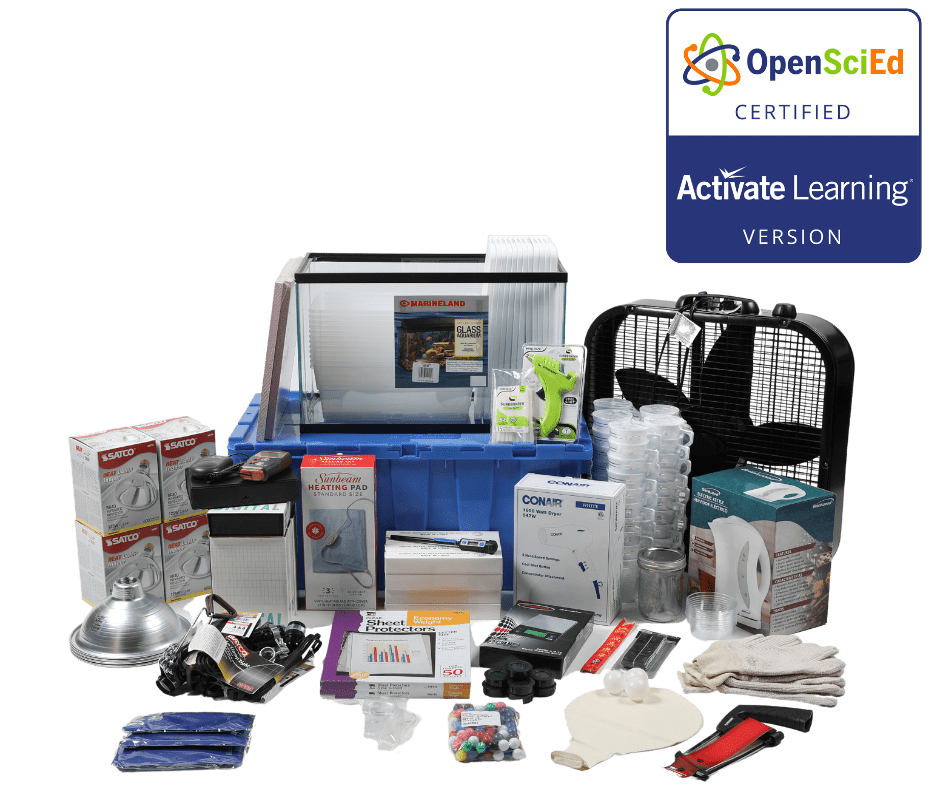
Certified OpenSciEd Science Kits
Science equipment and materials are an essential element to investigation-centered learning and Activate Learning offers science kits to support every activity in each unit for OpenSciEd K-12.
- All products are rigorously tested for quality assurance.
- Materials are grouped by lesson so teachers can easily locate lesson-specific materials.
- Teacher-Ready and Student-Ready items are prepared for the teacher, saving valuable prep time and supporting classroom management.
- Activate Learning Kit Companion™ helps teachers save time and easily find everything in their shipment, quickly access important Safety Data Sheets, and view how-to videos to set up materials.
Certified OpenSciEdProfessional Learning
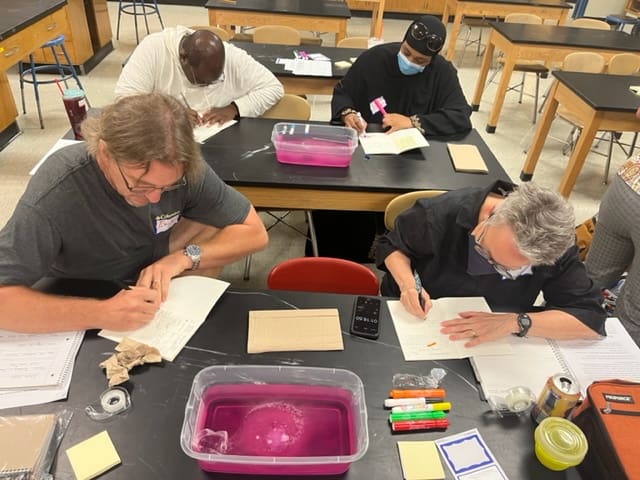
Activate Learning curriculum experts provide extensive OpenSciEd K-12 product implementation support and certified professional learning on the latest, most innovative strategies and techniques to engage students.
Comprehensive professional learning resources provide the necessary content, structure, and support to experience three-dimensional teaching and learning with OpenSciEd.
Scope and SequenceAt a Glance
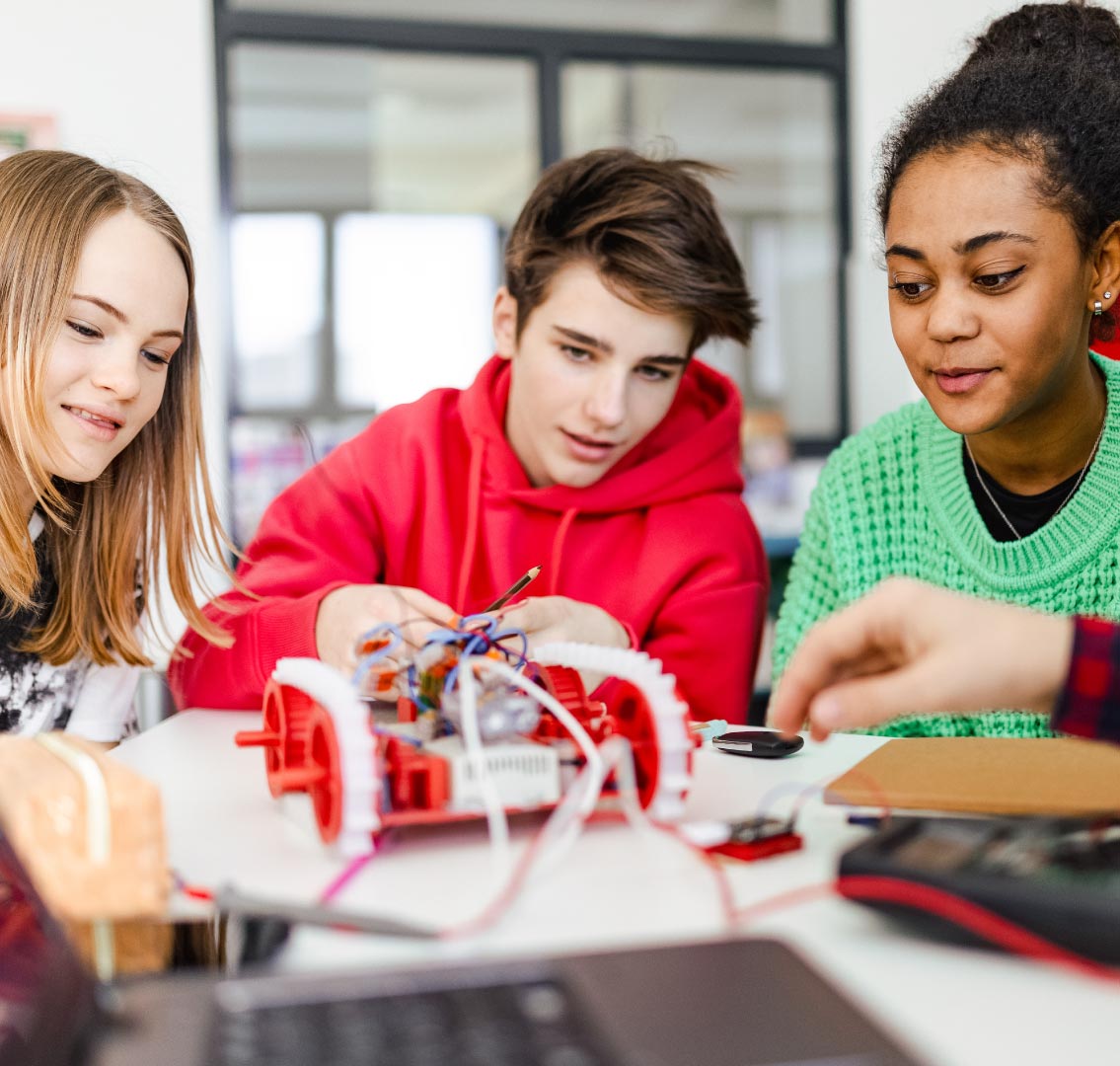
The OpenSciEd Instructional Model uses a storyline approach, each lesson motivated by questions generated by students following their interactions with phenomena. In each unit of study, students explore the questions they have, make conclusions based on those investigations, and then strategize to come up with the next set of questions to investigate.

Elementary School
Unit K.1 Energy: Sunlight Coming Soon
Why do some surfaces get hot and how can we make them less hot?
Unit K.2 Weather Spring 2025
How can we be prepared for the weather?
Unit K.3 Forces & Motion Fall 2025
How can we move things to where we want them to go?
Unit K.4 Ecosystems: Plants, Animals, and their Environment Spring 2026
What do plants and animals need and should we help them?
Unit 1.1 Waves: Light Coming Soon
How can we read under covers when it is dark?
Unit 1.2 Waves: Sound Spring 2025
How do objects make and use sound to communicate?
Unit 1.3 Space: Sky Patterns Fall 2025
How do patterns of the Sun, Moon, and stars affect what we see in the sky?
Unit 1.4 Animal & Plant Traits Spring 2026
How do animals and plants use their parts to survive?
Unit 2.1 Earth: Land Changing Shape Coming Soon
How do wind and water change the shape of the land and what can we do about it?
Unit 2.2 Structure & Properties of Matter Spring 2025
How can we design a new toy?
Unit 2.3 Habitats & Biodiversity Fall 2025
What plants and animals live in different lands, waters, and other places?
Unit 2.4 Plants Spring 2026
How is that growing there?
Unit 3.1 Forces & Interactions Coming Soon
How can we design objects to balance and move in different ways?
Unit 3.2 Weather & Hazards Spring 2025
Why do plants only grow well in certain places, and how can we protect them?
Unit 3.3 Trait Variations Fall 2025
Why do animals look and act the way that they do?
Unit 3.4 Ecosystem Change & Survival Spring 2026
How do changes to ecosystems affect what lives there?
Unit 4.1 Energy Transfer: Collisions Coming Soon
Why does an object’s motion change?
Unit 4.2 Energy Transfer: Electricity Spring 2025
How do we power computers and other electrical devices?
Unit 4.3 Earth Processes Fall 2025 Fall 2025
What causes Earth’s landscape to change and how do the changes impact humans?
Unit 4.4 Structure & Function Spring 2026
How do the structure and function of traits of living things benefit them?
Unit 5.1 Ecosystems & Matter Cycling Coming Soon
How does a nurse log help other things live and grow?
Unit 5.2 Matter Properties Spring 2025
How can we make water healthy for all living things?
Unit 5.3 Earth Systems Fall 2025
How does changing the flow of water impact Earth’s systems, and how can humans help?
Unit 5.4 Earth in the Universe Spring 2026
How and why does what I see in the sky change?
Middle School
6.1 Light & Matter: Why do we sometimes see different things when looking at the same object?
6.2 Thermal Energy: How can containers keep stuff from warming up or cooling down?
6.3 Weather, Climate & Water Cycling: Why does a lot of hail, rain, or snowfall at some times and not others?
6.4 Rock Cycling & Plate Tectonics: How and why does Earth's surface change?
6.5 Natural Hazards: Where do natural hazards happen and how do we prepare for them?
6.6 Cells & Systems: How do living things heal?

7.1 Chemical Reactions & Matter: How can we make something new that was not there before?
7.2 Chemical Reactions & Energy: How can we use chemical reactions to design a solution to a problem?
7.3 Metabolic Reactions: How do things inside our bodies work together to make us feel the way we do?
7.4 Matter Cycling & Photosynthesis: Where does food come from and where does it go next?
7.5 Ecosystem Dynamics: How does changing an ecosystem affect what lives there?
7.6 Resources & Human Impact: How do changes in the Earth's system impact our communities and what can we do about it?
8.1 Contact Forces: Why do things sometimes get damaged when they hit each other?
8.2 Sound Waves: How can a sound make something move?
8.3 Forces at a Distance: How can a magnet move another object without touching it
8.4 Earth in Space: Why do we see patterns in the sky, and what else is out there that we can't see?
8.5 Genetics: Why are living things different from one another?
8.6 Selection and Common Ancestry: How could living things today be connected to the things that lived long ago?

High School
B.1 Ecosystems Interactions & Dynamics
How do ecosystems work, and how can understanding them help us protect them?
B.2 Ecosystems: Matter & Energy
What causes fires in ecosystems to burn and how should we manage them?
B.3 Inheritance & Variation of Traits
Who gets cancer and why? Where should we focus efforts on treatment and prevention?
B.4 Natural Selection & Evolution of Populations
How is urbanization a driving force of evolution? Should we design urban spaces more hospitably for non-human species?
B.5 Common Ancestry & Speciation
How did polar bears evolve and what will happen to them as their environment changes?
C.1 Thermodynamics in Earth’s Systems
How can we slow the flow of energy on Earth to protect vulnerable coastal communities?
C.2 Structure & Properties of Matter
What causes lightning and why are some places safer than others when it strikes?
C.3 Molecular Processes in Earth Systems
How could we find and use the resources we need to live beyond Earth?
C.4 Chemical Reactions in our World
Why are oysters dying, and how can we use chemistry to protect them?
C.5 Energy from Chemical & Nuclear Reactions
Which fuels should we design our next generation vehicles to use?
P.1 Energy Flow from Earth’s Systems
How can we design more reliable systems to meet our communities’ energy needs?
P.2 Energy, Forces, & Earth’s Crust
How do forces in Earth’s interior determine what will happen to the surface we see?
P.3 Collisions & Momentum
What can we do to make driving safer for everyone?
P.4 Meteors, Orbits, & Gravity
How have collisions with objects from space changed Earth in the past, and how could they affect our future?
P.5 Electromagnetic Radiation
How do we use radiation in our lives, and is it safe for humans?
P.6 Stars & the Big Bang
Why do stars shine and will they shine forever?
Get Started Today
Thank you for the opportunity to share the Activate Learning OpenSciEd K-12 Curriculum with you!
Please connect with us if you have any questions.
Southern California:
Kori McAbee
Regional Sales Manager, Southern California
Phone: (714) 300-8373
Email: kmcabee@activatelearning.com
Northern California:
Susan Fallon, PhD
Regional Sales Manager, Northern California
Phone: (510) 708‑0723
Email: sfallon@activatelearning.com