TEKS Standards-Aligned Texas Integrated Physics and Chemistry™
The Texas Integrated Physics and Chemistry™ curriculum provided by Activate Learning includes project-based physics, chemistry, and Earth science chapters to meet the Texas Essential Knowledge and Skills for Science Standards (TEKS) for all students.
The Texas IPC program includes print and digital curriculum materials, science kits for hands-on investigations, and professional learning for educators.
The curriculum aligns to English Language Proficiency Standards and our digital platform offers text in over 130 languages!
Available as a package or for individual purchase


Digital
On the Activate Learning Digital Platform

Kits
Materials & Supplies

Professional Learning

Project-Based
Inquiry Approach
Students conduct laboratory and field investigations and make informed decisions using critical thinking and scientific problem-solving.

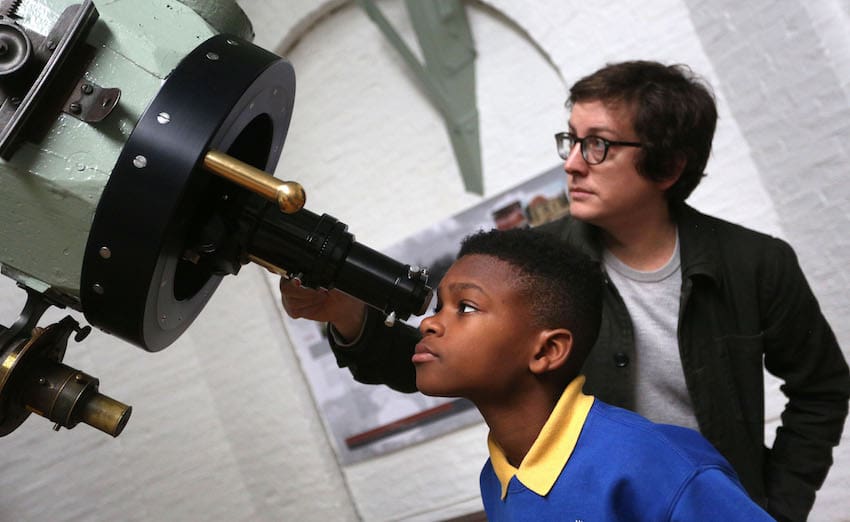
Students Learn Like Scientists and Engineers
Students ask questions, plan and conduct investigations, and explain phenomena using appropriate tools and models.

Total Support
for Teachers
Professional Learning is provided by our team of education specialists.
Need more info to decide if this the right curriculum for your district or school?
Texas Integrated Physics and Chemistry Curriculum Details
The Texas Integrated Physics and Chemistry high school science curriculum integrates the disciplines of physics and chemistry in the following topics: force, motion, energy, matter, and the Earth science topic of Earth’s natural resources.
-
STEM Chapter Challenges
Interesting and meaningful Chapter Challenges motivate students to learn and remember the physics, chemistry and Earth science content. Research shows that this project-based approach promotes excitement and meaningful learning for ALL students.
-
Student Centered
Texas IPC engages students in investigations and puts students at the center of the learning. Equipping students with essential 21st century skills that prepare them for their post-high school careers, all while covering 100% of the TEKS standards for IPC.
-
ELPS Alignment and Language Supports
The Texas IPC program includes embedded language supports for Multilingual learners built into our digital platform, and 100% alignment to the English Language Proficiency Standards (ELPS).
-
TEKS Alignment
The Texas IPC program reflects the full scope of integrated physical and chemistry science content standards for high school, with 100% alignment to the Texas Essential Knowledge and Skills (TEKS).
Texas Integrated Physics and Chemistry Research-Based Design
Texas Integrated Physics and Chemistry™ fosters scientifically literate students who will be prepared for the workforce, able to make informed decisions, and contribute as productive citizens in the 21st Century.
Texas Integrated Physics and Chemistry is research-based.
Texas Integrated Physics and Chemistry was supported through National Science Foundation funding and consequently produced through rigorous, iterative, research-based development cycles. The program is based on cognitive science research encapsulated in the 7E Instructional Model.
Students develop communication and collaboration skills.
In Texas Integrated Physics and Chemistry, students develop a community of practice and a culture of collaboration and communication. The presentations of the Chapter Challenge provide students with opportunities to engage in scientific arguments using evidence and scientific knowledge and promote a deeper understanding through public practice.
Students learn like scientists.
The science and engineering practices, as described in A Framework for K-12 Science Education, are integrated throughout the curriculum. Students engage with complex situations and collaborate on what they need to learn in order to manage the situation effectively.
Chapter Challenge: Students modify the design of a roller coaster to meet the needs of a specific group of riders.
Students use gravitational and potential energy to explain their observations of a ball rolling down an incline and a swinging pendulum. They investigate spring potential energy and explore the law of conservation of energy. They determine the relationship between gravitational force and distance. Students learn about the difference between mass and weight, and determine Hooke’s law and calculate spring potential energy. Newton’s second law for net forces is used to analyze a free-body diagram for objects undergoing acceleration. Students investigate centripetal force and apply it to a roller coaster. They pull a mass up different routes to a fixed height and develop a definition of work and its relationship to power.
Students develop concept maps on force and energy and explore examples of each on a roller coaster.
Chapter Challenge: Students design an appliance package for a family home that is powered by a wind-driven generator.
Students explore current, voltage, and resistance in parallel and series circuits. They create a simple fuse and calculate load limits of a household circuit. Students investigate heat transfer and learn about the laws of thermodynamics and entropy. They calculate the efficiency of various water heaters and apply this to designing their appliance package.
Chapter Challenge: Students develop a game to learn about and use the periodic table.
Students study the physical and chemical properties of elements and use the information to categorize elements as metals and nonmetals. They then learn about atoms, atomic mass, the law of definite proportions, and they discover how the model of an atom has changed over time. Students observe the spectra of several elements and learn about ionization potentials.
Next, the students learn about the noble gases and discover the octet rule. Finally, students examine how the average atomic mass of an element is determined, the factors that affect nuclear stability, and the difference between fission and fusion.
Chapter Challenge: Students develop a demonstration of chemistry concepts for a grade-school audience.
Students observe the characteristics of a chemical reaction and use indicators to identify acids and bases. They examine single- and double-replacement reactions and practice writing chemical equations. Students observe endothermic and exothermic reactions and factors that affect reaction rates. They explore the properties of acids and bases and the activity of metals.
Chapter Challenge: Students produce a report about the impact of an increase in the population of the community on the consumption and supply of natural resources.
Students compare U.S. use of energy resources for the production of electricity to other countries and identify the sources most commonly used for the production of electricity. They examine samples of different types of coal and look at possible ways to conserve coal. They consider how oil and gas deposits are discovered and investigate oil production, imports, and consumption. They extrapolate oil consumption into the future. Then they examine the environmental impacts of the use of coal and explore renewable resources focusing on solar and wind energy. Students also explore Earth’s mineral and water resources.
Digital Platform
The Activate Learning Digital Platform (ALDP) hosts the interactive digital edition of the Texas Integrated Physics and Chemistry teacher and student curriculum materials.
The platform is designed for student accessibility and inclusion and offers embedded translation for over 130 languages and text-to-speech with read-along highlighting in 35 languages.
Featuring an intuitive user experience, teachers have everything they need to Plan, Teach, Assign, and Assess lessons in a platform that is integrated with leading SIS rostering and Learning Management Systems such as Google Classroom, Schoology, and Canvas.
About The Authors
Select an author to learn more about their contributions to the fields of physical science, geology, Earth system sciences, and science education.
Physics & Chemistry, Chapters 1-4
Dr. Arthur Eisenkraft has taught high school physics for over 28 years. He is currently the Distinguished Professor of Science Education, Professor of Physics and Founding Director of the Center of Science and Math in Context (COSMIC) at the University of Massachusetts Boston.
Dr. Eisenkraft is the author of numerous science and educational publications and holds a patent for a Laser Vision testing system, which tests visual acuity for spatial frequency.
Dr. Eisenkraft has been recognized with numerous awards for his teaching, scholarship and service including: the National Science Board Public Service Award, 2017; the NSTA’s most prestigious award, the Robert H. Carleton Award for “making outstanding contributions to and providing leadership in science education at the national level,” 2010; the American Association of Physics Teachers (AAPT) Robert A. Millikan Medal for “notable and creative contributions in physics education,” 2009; Honorary Doctorate of Science, Rensselaer Polytechnic Institute, 1993; Disney American Teacher Award for Science Teacher of the Year, 1991; the Presidential Award for Excellence in Science Teaching from President Ronald Reagan, 1986.
In 1999, Dr, Eisenkraft was elected to a three-year cycle as the President Elect, President, and Retiring President of the NSTA, the world’s largest organization of science teachers. He has served on numerous committees of the National Academy of Science, including the content committee that has helped author the National Science Education Standards and the Framework for K-2 Science Education, and in 2003 he was elected a fellow of the American Association for the Advancement of Science (AAAS). Dr. Eisenkraft has been involved with several projects and chaired many notable competitions, including the Toshiba/NSTA ExploraVisions Awards (1991 to present), which he co-created; the Toyota TAPESTRY Grants (1990 to 2005); and the Duracell/NSTA Scholarship Competition (1984 to 2000). In 1993, he served as Executive Director for the XXIV International Physics Olympiad after being Academic Director for the United States team for six years.
Dr. Eisenkraft’s presently leads the Wipro Science Education Fellowship program which is bringing sustainable change to over 35 school districts across seven states. He has recently been supporting novel educational initiatives in Thailand and India. His current research projects include a study of professional development choices that teachers make when facing a large-scale curriculum change, assessing the technological literacy of K-12 students and investigating how teachers can become leaders without leaving the classroom.
Dr. Eisenkraft is a frequent presenter and keynote speaker. He has published over 100 articles and presented over 200 papers and workshops. Quantoons, written with L. Kirkpatrick and featuring illustrations by Tomas Bunk, led to an art exhibition at the New York Hall of Science.
Dr. Eisenkraft has been featured in articles in The New York Times, Education week, Physics Today, Scientific American, Science, the American Journal of Physics, and The Physics Teacher. He has testified before the United States Congress, appeared on NBC's The Today Show, National Public Radio, and many other radio and television broadcasts, including serving as the science consultant to ESPN’s Sports Figures.
Earth Science, Chapter 5
Mark Carpenter is an Education Specialist at the American Geosciences Institute. After receiving a B.S. in Geology from Exeter University, England, he undertook a graduate degree at the University of Waterloo and Wilfrid Laurier, Canada, where he began designing geology investigations for undergraduate students and worked as an instructor. He has worked in basin hydrology in Ontario, Canada, and studied mountain geology in the Pakistan and Nepal Himalayas. As a designer of learning materials for AGI, he has made educational films to support teachers and is actively engaged in designing inquiry-based activities in Earth system science for students of various ages.
Earth Science, Chapter 5
Matthew Hoover serves as Education Specialist for the American Geosciences Institute, developing Earth science educational resources and curriculum programs at the elementary, middle, and high school levels. He received a B.S. in Geology from Boston College, an M.A. in Environmental Policy from George Washington University, and an M.Ed. in Curriculum and Instruction from George Mason University. As a certified teacher, he has taught elementary and middle school Earth, life, and physical sciences. Prior to joining AGI, he worked for NASA’s GLOBE Program, coordinating teacher training and designing environmental science investigations and learning activities for K–12 students.
Earth Science, Chapter 5
Michael Smith was Director of Education at the American Geosciences Institute in Alexandria, Virginia. Dr. Smith worked as an exploration geologist and hydrogeologist. He began his Earth Science teaching career with Shady Side Academy in Pittsburgh, PA in 1988 and most recently taught Earth Science at the Charter School of Wilmington, DE. He earned a doctorate from the University of Pittsburgh’s Cognitive Studies in Education Program and joined the faculty of the University of Delaware School of Education in 1995. Dr. Smith received the Outstanding Earth Science Teacher Award for Pennsylvania from the National Association of Geoscience Teachers in 1991, served as Secretary of the National Earth Science Teachers Association, and is a reviewer for Science Education and The Journal of Research in Science Teaching. He worked on the Delaware Teacher Standards, Delaware Science Assessment, National Board of Teacher Certification, and AAAS Project 2061 Curriculum Evaluation programs.
Earth Science, Chapter 5
John Southard received his undergraduate degree from the Massachusetts Institute of Technology in 1960 and his doctorate in geology from Harvard University in 1966. After a National Science Foundation postdoctoral fellowship at the California Institute of Technology, he joined the faculty at the Massachusetts Institute of Technology, where he is currently a Professor of Geology Emeritus.
He was awarded the MIT School of Science teaching prize in 1989 and was one of the first cohorts of first MacVicar Fellows at MIT, in recognition of excellence in undergraduate teaching. He has taught numerous undergraduate courses in introductory geology, sedimentary geology, field geology, and environmental Earth Science both at MIT and in Harvard’s adult education program.
He was editor of the Journal of Sedimentary Petrology from 1992 to 1996, and he continues to do technical editing of scientific books and papers for SEPM, a professional society for sedimentary geology. Dr. Southard received the 2001 Neil Miner Award from the National Association of Geoscience Teachers.